
Teething Pain in Babies: Symptoms, Timeline, and Relief Tips Every Parent Should Know
Teething pain is the discomfort a baby feels when new teeth push through the gums, usually starting around 6 months of age. It often causes swollen gums, drooling, irritability, and a strong urge to chew on objects. While teething is uncomfortable, it is a normal part of infant development and can be managed safely at home with the right care and with guidance from a qualified Pediatric Dentist when symptoms feel unusual or severe.
This guide explains everything a parent needs to know about teething pain from early warning signs to the full teething timeline, safe relief methods, and when a visit to a dental expert is necessary.
What Is Teething Pain?
Teething pain happens when a tooth moves through the jawbone and breaks through the gum tissue. This movement irritates the nerve endings in the gums, causing soreness, mild swelling, and sensitivity. Every baby experiences teething differently some show barely any discomfort, while others become noticeably fussy for days.
Understanding what’s normal and what’s not helps parents respond with confidence instead of worry.
Teething Symptoms in Babies
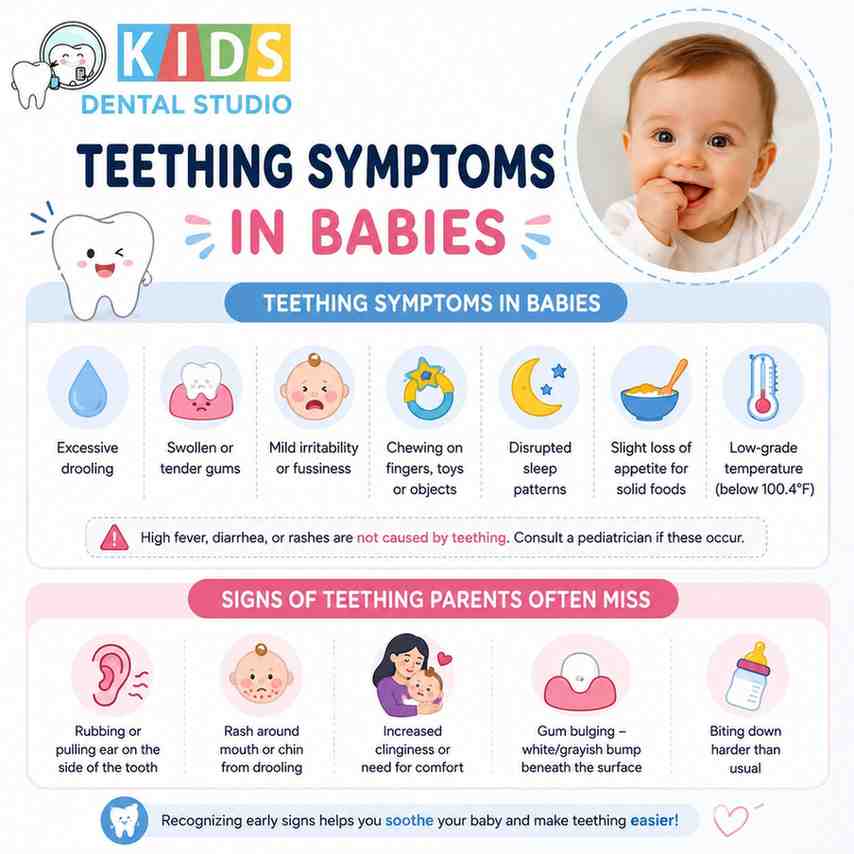
Teething symptoms usually appear a few days before a tooth actually breaks through and may continue for several days afterwards. Common teething symptoms in babies include:
- Excessive drooling
- Swollen or tender gums
- Mild irritability or fussiness
- Chewing on fingers, toys, or other objects
- Disrupted sleep patterns
- Slight loss of appetite for solid foods
- A low-grade temperature (below 100.4°F)
It’s important to note that high fever, diarrhoea, or rashes are not caused by teething. If these appear alongside teething symptoms, a pediatrician should be consulted, as they may indicate an unrelated illness.
Signs of Teething in Babies
Beyond the obvious symptoms, there are subtler signs of teething in babies that parents sometimes overlook:
- Rubbing or pulling at the ear on the side of the emerging tooth
- A slight rash around the mouth or chin from constant drooling
- Increased clinginess or need for comfort
- Gum bulging visible as a white or grayish bump beneath the surface
- Biting down harder than usual during feeding
Recognising these early signs allows parents to start soothing measures before discomfort peaks.
Teething Timeline: Which Tooth Comes First
The teething timeline follows a fairly predictable pattern, though every baby’s pace can vary slightly. Here is the general order in which baby teeth typically emerge:
| Tooth | Approximate Age |
| Lower central incisors | 6–10 months |
| Upper central incisors | 8–12 months |
| Upper lateral incisors | 9–13 months |
| Lower lateral incisors | 10–16 months |
| First molars | 13–19 months |
| Canines | 16–22 months |
| Second molars | 23–33 months |
By around age 3, most children have a complete set of 20 primary teeth. The molars and canines tend to cause more discomfort than the front teeth because of their larger surface area.
The team at Kids Dental Studio closely tracks each child’s tooth development to ensure healthy growth and early detection of any spacing or alignment concerns.
Conclusion
Teething is a natural milestone, and most babies get through it with simple home care like cold relief and gentle gum massage. Watch for unusual symptoms like high fever or prolonged distress. When in doubt, trust a professional opinion; proper guidance now builds the foundation for healthy smiles later.
Give Your Baby Expert Dental Care
Don’t let teething worries keep you up at night. Visit Kids Dental Studio for gentle, expert guidance on your baby’s oral health journey. Book your visit today.
FAQ’S
What can you do for a teething baby?
You can ease a teething baby’s discomfort with a chilled (not frozen) teething ring, a gentle finger massage on the gums, extra cuddling, and frequent wiping to prevent drool rash. For babies already on solids, cold purees or yogurt can also soothe sore gums.
What is the fastest relief for teething pain?
Cold pressure gives the fastest relief a chilled teething ring or a clean, cold washcloth applied directly to the gums provides almost immediate comfort. Gentle gum massage with a clean finger also works quickly by counteracting the pressure of the emerging tooth.
Why is teething worse at night?
Teething often feels worse at night because there are fewer distractions to take a baby’s mind off the discomfort, and lying flat increases blood flow to the head and gums, intensifying pressure. This is why babies who seem fine during the day can become unsettled after bedtime.
Should I give my baby paracetamol for teething?
Paracetamol can be used in age-appropriate, pediatrician-approved doses for short-term relief if teething is significantly disrupting sleep or feeding. It shouldn’t be the first response, though — always check correct dosage and frequency with a pediatrician or pediatric dentist first.
What not to do during teething?
Avoid teething gels with benzocaine, amber teething necklaces (choking/strangulation risk), frozen rock-hard teething rings, and rubbing aspirin or alcohol on the gums. Also don’t ignore a prolonged fever, since it’s unlikely to be caused by teething alone.
Leave a reply