
Thumb Sucking Effects on Teeth: How the Habit Can Affect Your Child’s Smile
Medically reviewed by [Dr. Kisha Mehta], DDS, Pediatric Dentist at Kids Dental Studio, Ahmedabad
If your child sucks their thumb, you’re not alone in wondering what it means for their teeth. Thumb sucking is one of the most common habits in babies and young children, and in most cases, it’s nothing to worry about. It’s a natural, self-soothing behaviour that many children outgrow on their own.
At Kids Dental Studio, a pediatric dental clinic in Ahmedabad, we get asked about thumb sucking at nearly every well-child visit. Parents often want to know whether the habit could shift their child’s teeth, whether it matters more once permanent teeth arrive, and when it’s worth getting a professional opinion. This guide walks through what actually happens, what depends on your child’s individual habit, and what signs deserve a closer look from a pediatric dentist.
Why Do Children Suck Their Thumbs?
Thumb sucking usually isn’t a behavior children choose consciously it’s closer to a reflex. Many babies begin sucking their thumb even before birth, and the habit often continues afterward because it helps them feel calm.
Common reasons children suck their thumb include:
- Self-soothing during stress or unfamiliar situations
- Comfort when tired, bored, or overwhelmed
- Falling asleep more easily
- Habit and routine, especially at nap time or bedtime
- Emotional reassurance in new environments
For most infants and toddlers, this is simply part of normal development, not a sign that something is wrong.
Is Thumb Sucking Normal?
Yes, for a certain stage of childhood, thumb sucking is considered normal.
| Age Stage | What’s Typical |
|---|---|
| Infants | Expected and generally not a concern at all |
| Toddlers (roughly 1–3 years) | Still very common; usually no lasting effect on teeth |
| Preschool (around 3–4 years) | Many children naturally start to reduce the habit |
| Older children (beyond early preschool) | Dentists pay closer attention, especially as permanent teeth develop |
Thumb Sucking Effects on Teeth
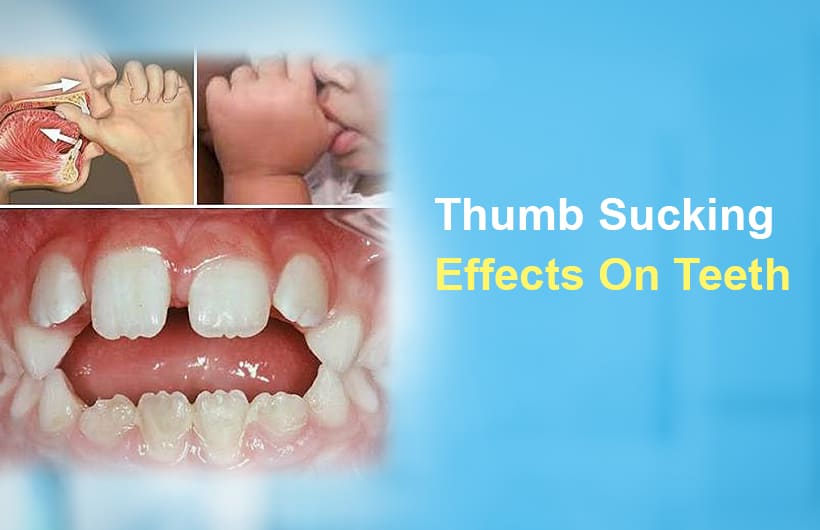
Not every child who sucks their thumb will develop dental problems. The likelihood and extent of any effect depends on a combination of factors: how long the habit continues, how frequently it happens, and how intensely the child sucks (a passive, resting thumb causes far less pressure than active, vigorous sucking).
When a habit is prolonged, frequent, and intense, possible effects can include:
- Changes in tooth alignment, particularly the front teeth tipping forward
- Open bite, where the upper and lower front teeth don’t meet when the mouth is closed
- Changes in how the upper and lower teeth come together, sometimes called a bite change
- Changes in the shape of the developing palate (the roof of the mouth), due to repeated pressure from the thumb
- Other subtle shifts in oral development as the jaw and teeth continue to grow
When Should Parents Worry About Thumb Sucking?
Most thumb sucking doesn’t require any action beyond gentle observation. However, there are specific signs that may justify having a pediatric dentist take a look:
- The habit continues well beyond the developmental stage where most children stop
- You notice visible changes in how your child’s front teeth line up
- Their bite looks different, for example, the front teeth not meeting properly
- You notice changes in the shape of the roof of their mouth
- Your child wants to stop but seems unable to on their own
- You’re specifically concerned about the effect on emerging permanent teeth
None of these signs means something is definitely wrong; they simply mean it’s a good time for a professional look, rather than guesswork at home.
Can Children Stop Thumb Sucking Naturally?
Yes, many children do stop on their own as they grow, without any formal intervention. As children develop new coping skills, gain more independence, and become more socially aware, the need for thumb sucking as a self-soothing tool often fades naturally.
Several factors can influence whether a child stops on their own, including their temperament, how the habit is tied to specific triggers (like sleep or anxiety), and social factors such as starting school. That said, natural cessation isn’t guaranteed for every child; some benefit from a bit of extra support, which is completely normal and not a reflection of anything being “wrong.”
Does Thumb Sucking Delay Speech?
This question comes up often, and the honest answer is more nuanced than a simple yes or no. Thumb sucking on its own shouldn’t automatically be treated as a direct cause of speech delay.
However, in cases where prolonged, intense thumb sucking leads to noticeable bite changes or shifts in the palate, those structural changes can sometimes influence how certain sounds are formed which is a different mechanism than the habit “causing” a delay directly. Speech development is also influenced by many other factors unrelated to thumb sucking.
If you have concerns about your child’s speech, it’s worth having it assessed individually, rather than assuming thumb sucking is the sole reason.
How Can Parents Help a Child Stop Thumb Sucking?
If you’d like to help your child move away from the habit, gentle and positive strategies tend to work best and they avoid the stress that comes with pressure or punishment.
Helpful approaches include:
- Gentle reminders rather than scolding, especially since thumb sucking is often unconscious
- Positive reinforcement, such as praise or a simple sticker chart for progress
- Identifying triggers, like tiredness, boredom, or anxiety, and addressing the underlying need
- Offering comfort alternatives, such as a favorite toy or a hand-occupying activity
- Using reward systems where appropriate, focused on encouragement rather than pressure
- Avoiding shame or punishment, which can make a habit harder to break, not easier
- Staying consistent, since habit change usually takes time and patience
Every child responds differently, so it’s fine if progress isn’t linear. What matters most is a supportive, low-pressure approach.
When Is Pediatric Dental Treatment Needed?
Not every child who sucks their thumb needs dental treatment; most simply need time and, sometimes, gentle encouragement at home. Treatment tends to become relevant only in specific situations, such as when:
- The habit is persistent and hasn’t responded to home strategies
- There are visible dental changes, such as shifting teeth or an open bite
- The child’s bite has changed in a way that concerns the family or dentist
- The habit continues as permanent teeth are erupting
- The child wants help stopping but hasn’t been able to on their own
In these situations, a pediatric dentist can evaluate the habit and the teeth directly, and discuss appropriate next steps based on what they observe which may range from continued monitoring to a habit-breaking appliance in more persistent cases.
When Should Parents Visit a Pediatric Dentist?
Routine dental check-ups are a good opportunity to have thumb sucking assessed as part of your child’s broader oral development even if you’re not currently worried about it. A pediatric dentist can track how your child’s teeth and bite are developing over time, which makes it easier to catch subtle changes early rather than after they’ve become more noticeable.
This is part of why regular visits matter, alongside topics like how baby teeth and permanent teeth interact as they grow together.
At Kids Dental Studio, a pediatric dental clinic in Ahmedabad, habit evaluation is simply one part of comprehensive care for growing children. If you’re unsure whether your child’s thumb sucking needs attention, a routine visit is a low-pressure way to get clarity, rather than guessing at home.
Ready for a Check-Up?
If you’d like a professional opinion on your child’s thumb-sucking habit or their overall dental development, the team at Kids Dental Studio is happy to help. You can get in touch or book a consultation at a time that works for your family.
Frequently Asked Questions
Is thumb sucking harmful to permanent teeth?
It can be, but not always. Risk goes up when the habit is frequent and intense as permanent teeth erupt, generally from age 6 onward. If it persists into school age, have a pediatric dentist check it.
What age is best to stop thumb sucking?
Most children reduce or stop between the toddler and early preschool years. There’s no fixed cutoff, but continuing once permanent teeth start coming in is when dentists pay closer attention.
Do all thumb-sucking children need treatment?
No. Most young children need no treatment at all; the habit often resolves on its own. Treatment matters mainly when it’s persistent, intense, and causing visible dental changes.
Does thumb sucking delay speech?
Not directly. It isn’t considered a direct cause of speech delay, though significant bite or palate changes from prolonged sucking can sometimes affect certain sounds. Speech concerns are best evaluated on their own.
How can I break a thumb-sucking habit?
Gentle reminders, positive reinforcement, and comfort alternatives work best. Avoid shame or pressure. If home strategies aren’t working, a pediatric dentist can help.
This article is intended for general educational purposes and does not replace individual professional dental evaluation. Every child’s oral development is different — if you have specific concerns about your child’s thumb-sucking habit or dental development, please consult a pediatric dentist.