
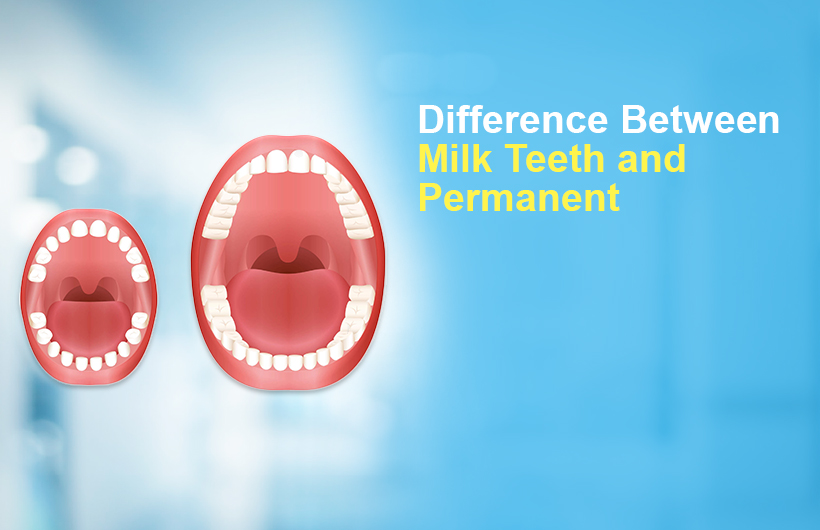
Difference Between Milk Teeth and Permanent Teeth: A Parent’s Guide
As a parent, you will watch your child go through two complete sets of teeth. The first set, milk teeth, arrives early and quietly. The second set, permanent teeth, is meant to last a lifetime. Understanding the difference between milk teeth and permanent teeth helps you make the right decisions for your child’s dental health at every stage.
What are Milk Teeth?
Milk teeth are the first set of teeth your child develops. They are also called baby teeth, primary teeth, or deciduous teeth. These teeth begin forming before birth and start pushing through the gums when your baby is around six months old.
By the time your child turns three, a full set of 20 milk teeth is usually in place. There are 10 in the upper jaw and 10 in the lower jaw, covering incisors, canines, and molars.
When Do Milk Teeth Come In?
The first teeth to appear are usually the lower central incisors, around six to ten months of age. The rest follows in a gradual sequence. Most children have all 20 milk teeth by the age of two and a half to three years.
How Many Milk Teeth Does Your Child Have?
Your child will have exactly 20 milk teeth. These are smaller and spaced out to suit the growing jaw of a young child.
What are Permanent Teeth?
Permanent teeth, also called adult teeth or secondary teeth, replace the milk teeth as your child grows. These are the teeth your child will rely on for the rest of their life, which makes their care especially important.
When Do Permanent Teeth Start to Appear?
The first permanent teeth typically begin to erupt around age six. The process continues steadily until the early teenage years. Wisdom teeth, the final permanent teeth, usually arrive in the late teens or early twenties.
How Many Permanent Teeth Will Your Child Have?
A full set of permanent teeth includes 32 teeth, counting wisdom teeth. Without wisdom teeth, most adults have 28 permanent teeth.
Milk Teeth vs Permanent Teeth: Key Differences at a Glance
Here is a side by side look at how milk teeth and permanent teeth compare:
| Feature | Milk Teeth | Permanent Teeth |
| Total number | 20 | 32 (28 without wisdom teeth) |
| First appearance | Around 6 months | Around 6 years |
| Size | Smaller | Larger |
| Color | Bright white | Slightly yellowish |
| Enamel thickness | Thin and delicate | Thick and stronger |
| Root depth | Shorter, shallower roots | Longer, deeper roots |
| Lifespan | Temporary (shed by age 12) | Lifelong |
| Cavity risk | Higher due to thin enamel | Lower but still present |
Why Milk Teeth Matter More Than You Think
Many parents assume milk teeth are not worth worrying about because they will eventually fall out. This is one of the most common misconceptions in pediatric dental care. Milk teeth play a critical role in your child’s overall development.
They Hold Space for Permanent Teeth
Each milk tooth acts as a natural placeholder for the permanent tooth that will follow. If a milk tooth is lost too early due to decay or injury, the surrounding teeth can shift into the gap. This leaves less room for the permanent tooth, leading to crowding or misalignment later.
They Support Speech and Eating
Teeth help your child form sounds and words correctly. They also allow proper chewing, which supports good nutrition and digestion during the most important years of growth.
Decay in Milk Teeth Can Affect Permanent Teeth
Because milk teeth have thinner enamel and shorter roots, decay spreads faster than it does in adult teeth. An infected milk tooth can damage the permanent tooth forming underneath it. Treating cavities in milk teeth is not just about that tooth; it is about protecting what comes next.
A healthy milk tooth is the best foundation for a strong permanent tooth.
The Eruption Timeline: What to Expect and When
Every child is different, but here is a general guide to the eruption sequence for both sets of teeth:
Milk Teeth Eruption
- 6 to 10 months: Lower and upper central incisors
- 9 to 13 months: Upper lateral incisors
- 16 to 22 months: Canines (cuspids)
- 13 to 19 months: First molars
- 25 to 33 months: Second molars
Permanent Teeth Eruption
- 6 to 7 years: First permanent molars and lower central incisors
- 7 to 8 years: Upper central incisors and lower lateral incisors
- 9 to 11 years: Canines and first premolars
- 10 to 12 years: Second premolars and upper lateral incisors
- 11 to 13 years: Second molars
- 17 to 21 years: Wisdom teeth (third molars)
Common Problems Parents Should Watch For
Over Retained Milk Teeth
Sometimes a milk tooth does not fall out on its own even after the permanent tooth has started to erupt. This is called an over retained milk tooth. When this happens, the permanent tooth can come in at an angle or in the wrong position. If you notice two rows of teeth, visit a pediatric dentist right away.
Early Loss of Milk Teeth
If your child loses a milk tooth earlier than expected due to a fall or decay, the teeth on either side can drift into the empty space. A pediatric dentist may recommend a space maintainer to hold the gap open until the permanent tooth is ready to come in.
Cavities Progress Faster in Milk Teeth
Because milk teeth have thinner enamel and dentin, a cavity that might take months to develop in a permanent tooth can reach the nerve of a milk tooth much faster. Regular checkups and early treatment make a significant difference.
How to Care for Both Sets of Teeth
Good dental habits start before the first tooth even arrives. Here is what you can do at every stage:
- Wipe your newborn’s gums with a clean damp cloth after feeds.
- Begin brushing as soon as the first milk tooth appears, using a tiny smear of fluoride toothpaste.
- Switch to a pea sized amount of toothpaste once your child turns three.
- Supervise brushing until your child is at least seven or eight years old.
- Limit sugary foods and drinks, especially between meals.
- Avoid putting your baby to sleep with a bottle of milk or juice.
- Begin flossing as soon as two teeth touch each other.
Both milk teeth and permanent teeth need the same level of care. The habit you build in childhood is the habit your child carries for life.
When to Visit a Pediatric Dentist in Ahmedabad
The Indian Academy of Pediatrics and most dental associations recommend that a child’s first dental visit happen within six months of the first tooth erupting, or by their first birthday at the latest.
At Kids Dental Studio in Ahmedabad, our team specialises in making your child’s dental visits comfortable, reassuring, and effective. Whether it is a routine checkup, a concern about milk teeth falling too early, or questions about your child’s permanent teeth coming in, we are here to guide you.
Early visits help us spot problems before they become serious. They also help your child build a positive relationship with dental care from a young age.
Book your child’s first dental visit at Kids Dental Studio, Ahmedabad. Healthy teeth start with early care.
Leave a reply