
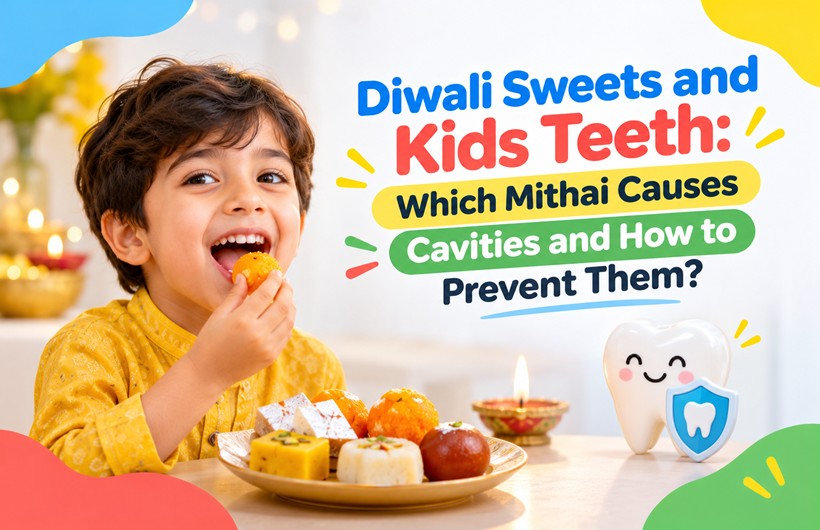
Diwali Sweets and Kids Teeth: Which Mithai Causes Cavities and How to Prevent Them?
The mithai boxes are open, and your child wants one more piece. You are wondering what it will do to their teeth.
Diwali sweets and kids teeth are a risky mix mostly when the sweet is sticky and eaten again and again through the day. Chikki, jalebi and kaju katli stay on teeth longer, so bacteria make acid for longer.
We do not ask families to skip Diwali. As a pediatric dental clinic in Ahmedabad, we ask for smarter choices, and we offer fluoride application in Ahmedabad to help protect milk teeth.
Can Diwali sweets cause cavities in children?
Yes, but not on their own. A cavity needs sugar, bacteria and time on the tooth. Bacteria feed on sugar and make acid, and that acid slowly wears away enamel.
The American Academy of Pediatric Dentistry (AAPD) notes that the longer teeth are exposed to sugar, the longer cavity-causing bacteria can feed on it.
The World Health Organization (WHO) advises keeping free sugars below 10% of daily energy, and ideally below 5%, to lower the risk of tooth decay.
If a cavity has already started, early care keeps it small. You can read about our pediatric dental treatments in Ahmedabad.
Which Indian sweets cause cavities in kids?
Sticky and syrupy mithai cause the most trouble. The table below ranks common Diwali sweets by how long sugar tends to stay on a child’s teeth.
| Sweet | Why it matters for teeth | Cavity risk |
| Chikki, til gajak | Hard and sticky. Sugar clings to chewing surfaces. | Higher |
| Jalebi | Coated in sugar syrup that lingers on teeth. | Higher |
| Toffee, caramel, gummy candy | Chewy. Stays stuck in tooth grooves for a long time. | Higher |
| Kaju katli, barfi | Dense and sticky. Packs into back-tooth grooves. | Medium to higher |
| Gulab jamun, rasgulla | Soft, but soaked in syrup that coats the teeth. | Medium |
| Besan or motichoor laddoo | Crumbly. Sugary bits settle in grooves. | Medium |
| Plain chocolate | Melts and washes off teeth faster than sticky sweets. | Lower |
This is a general guide, not a lab test. Any sugary sweet can cause a cavity if sugar stays on the teeth.
Is chocolate better than mithai for kids’ teeth?
Usually, yes. Chocolate and kids teeth get along better because chocolate melts and washes off quickly. Dark chocolate also has less sugar than milk chocolate, according to AAPD-based guidance.
- Choose plain chocolate over chocolate with caramel or toffee.
- Skip sour candy. It adds acid on top of sugar.
- Remember it is still sugar. Rinse and brush as usual.
Why do sticky sweets harm children’s teeth more?
Children’s back teeth have deep grooves. Sticky sweets sink into these grooves and are hard to rinse away.
Milk teeth also have thinner enamel than adult teeth, so decay can spread faster. Sticky sweets and children’s teeth are a bad match, especially between meals.
How can you prevent cavities in children during Diwali?
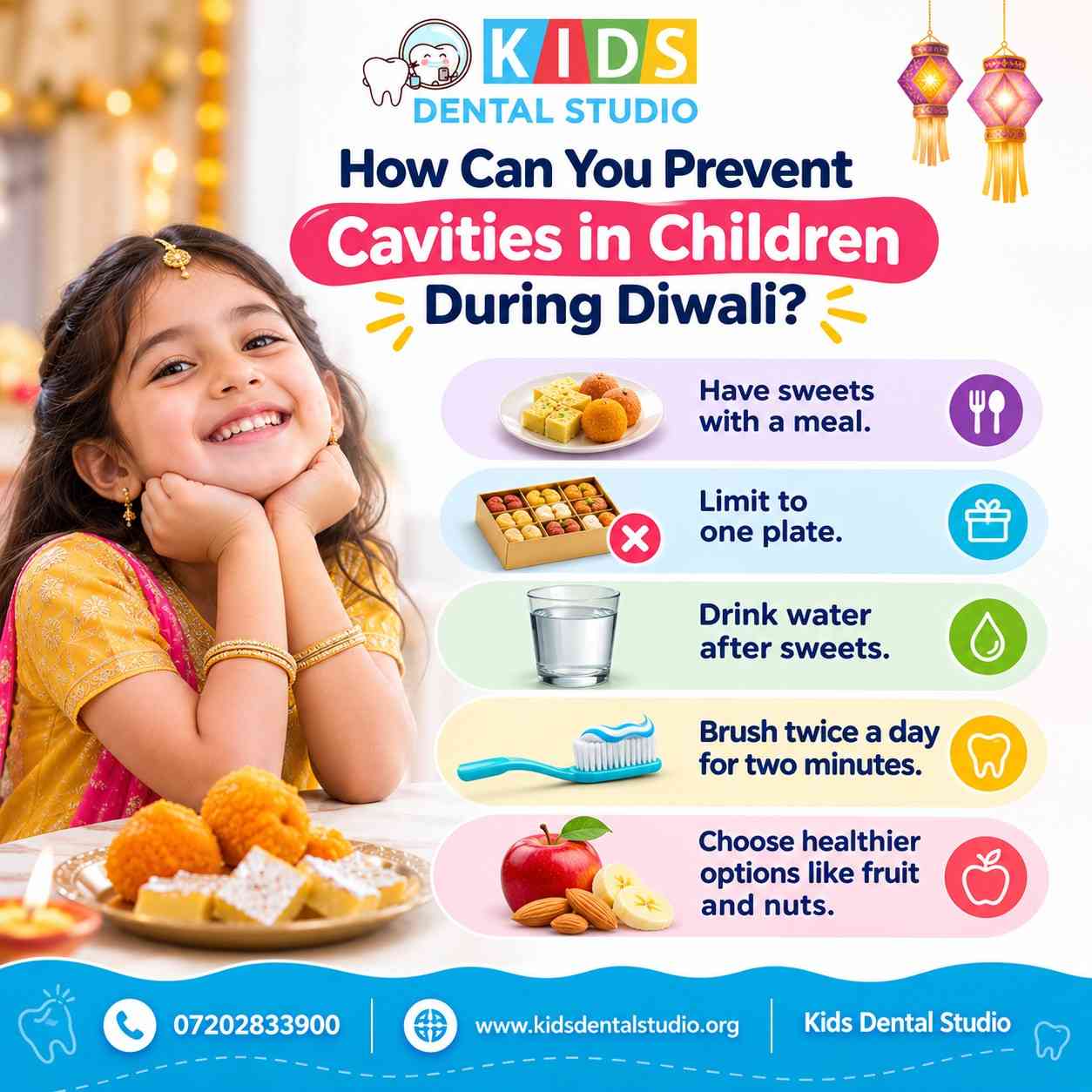 The doctors at Kids Dental Studio suggest a simple plan for children’s dental care during Diwali:
- Serve sweets with a meal. More saliva helps wash sugar away.
- Use one plate, not the whole box. Grazing all day keeps sugar on teeth.
- Offer water after sweets. Swish and swallow, or rinse the mouth.
- Brush twice a day for two minutes. Never skip bedtime brushing, even after late-night puja or guests.
- Swap some mithai. Plain chocolate, fruit and nuts are better options for toddlers old enough to chew them safely.
- Pass the plate wisely. Ask relatives to give sweets at meal time, not as a constant treat.
How do you protect milk teeth from cavities all year?
Festival sweets are only one part of the picture. Daily habits protect milk teeth far more:
- Brush morning and night with a fluoride toothpaste suited to your child’s age.
- Do not let a child sleep with a sweet drink or milk bottle.
- Book a dental check-up every six months.
- Ask us if your child needs fluoride varnish.
Milk teeth also guide permanent teeth into place. Our guide on baby teeth and permanent teeth explains how.
Does it matter when your child eats sweets during Diwali?
Yes, timing matters as much as the sweet itself. One piece after lunch is kinder to teeth than small bites spread across the whole evening.
Every time your child eats sugar, the mouth stays acidic for a while. Saliva then needs time to wash the acid away and repair the enamel.
Constant snacking on mithai never gives teeth that recovery time. This is why a few planned sweet moments are better than a bowl left on the table.
- Pick one or two fixed times for sweets, such as after lunch and after dinner.
- Keep the sweet box out of sight between those times.
- Avoid sweets right before sleep. Saliva flow drops at night, so sugar sits longer.
Are Diwali sweets worse for toddlers than for older children?
Toddlers and preschoolers face extra risk. Their milk teeth have thinner enamel, and they cannot brush well without help.
Sticky pieces like chikki and toffee can also be a choking hazard for very young children, and hard pieces can chip a tooth.
- Under 3 years: offer soft, small pieces and stay close while they eat.
- Ages 3 to 6: help with brushing, as most children cannot clean the back teeth alone.
- Older children: let them choose a favourite sweet, then rinse and brush.
If your child is very young, we are happy to guide you on safe options for their age.
Are sugar-free and “healthy” Diwali sweets safe for teeth?
Not always. A sweet can be labelled “healthy” and still stick to the teeth. Dry fruit rolls, date-based sweets and jaggery chikki are examples that can cling for a long time.
Look at how sticky the sweet is, not just the label. A sweet that is still stuck in the teeth after a few minutes is a higher cavity risk, whatever it is made of.
What if your child already ate too many sweets?
Do not panic. One heavy sweet day will not ruin your child’s teeth, and guilt does not help.
- Give water and let your child rinse the mouth well.
- Brush at bedtime, even if it is very late.
- Go back to normal sweet timing the next day.
- Look at the teeth for new brown or white spots over the next week.
Conclusion
Diwali sweets and kids teeth can live together happily with a little planning. Choose less sticky sweets, serve them with meals, rinse with water and brush before bed.
Best Pediatric Clinic in Ahmedabad
If you want your child’s teeth checked after the festival, contact us to book an appointment, or phone +91 72028 33900.
Frequently Asked Questions
Can Diwali sweets cause cavities in children?
Yes. Sugar feeds bacteria, and the bacteria make acid that damages enamel. Sticky sweets eaten often, and not cleaned off, raise the risk.
Which Indian sweets are worst for kids’ teeth?
Sticky and syrupy ones such as chikki, jalebi, toffee and kaju katli tend to stay on teeth longer. Any sweet that clings to the teeth is a higher risk.
Is chocolate better than mithai for children’s teeth?
Plain chocolate melts and rinses off more easily than sticky mithai, so it is usually the lesser risk. It still contains sugar, so rinsing and brushing still matter.
How much sugar is safe for children?
WHO advises keeping free sugars below 10% of daily energy, and ideally below 5%. Your pediatric dentist can help you apply this to your child’s age.
Should my child brush right after eating sweets?
Rinse with water right after sweets, then brush twice a day as usual. The most important brush of the day is the one before bed.
How do I protect my child’s milk teeth from cavities?
Brush twice a day with fluoride toothpaste, limit sticky sweets between meals, and visit a dentist every six months. Ask whether fluoride varnish suits your child.
Are jaggery sweets better for my child’s teeth?
Jaggery sweets still contain sugar and can be just as sticky. They are not a safe swap, so rinse and brush after eating them.
Leave a replyThis blog is for information only and is not medical advice. Every child is different, so please have your child examined before treatment decisions.
Leave a reply