
My Child Chipped or Knocked Out a Tooth: What to Do in the First 30 Minutes
Your child fell, there’s blood, and a tooth is missing or broken. In this moment, what you do in the next few minutes matters more than almost anything a dentist will do later. If your child needs child dental emergency care, the steps below will tell you exactly what to do first, and what to avoid. We treat these injuries often at our pediatric dental clinic in Ahmedabad, and the single biggest factor in a good outcome is usually how quickly and calmly a parent responds at home.
Is This Actually an Emergency?
Not every knock to the mouth needs a same-hour visit, but some signs mean you shouldn’t wait:
- A tooth is completely out of the socket
- A tooth is pushed sideways, in, or out of position
- There’s a visible crack that exposes pink or reddish tissue inside the tooth
- Bleeding from the gums won’t stop after 10–15 minutes of gentle pressure
- Your child has facial swelling, can’t close their mouth normally, or is in significant pain
If any of these apply, don’t wait for an appointment slot. Call your dentist immediately and describe what happened. If your child also hit their head hard, lost consciousness even briefly, or you’re worried about a jaw fracture, go to a hospital emergency room first.
My Child’s Permanent Tooth Was Knocked Out: What Now?
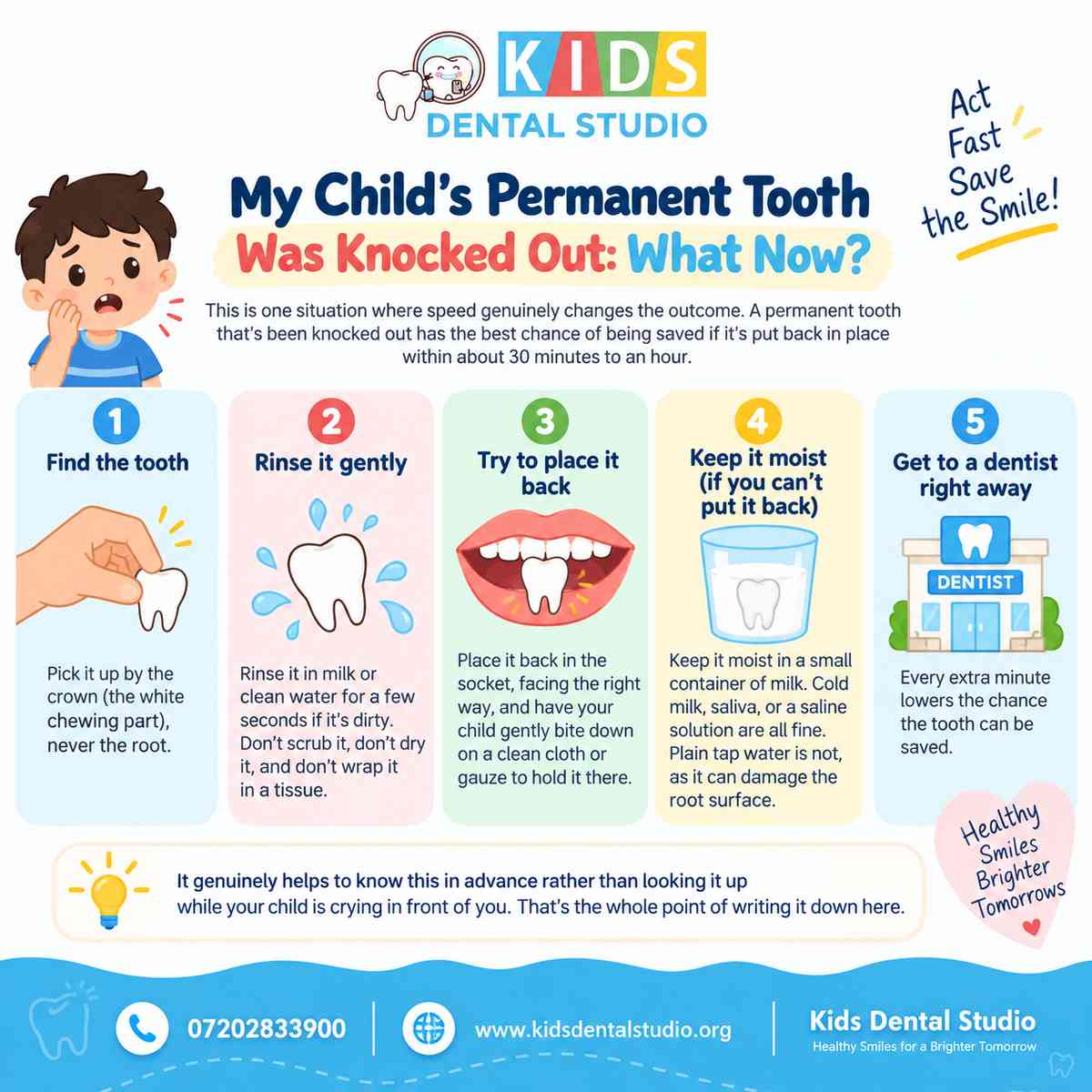 This is the one situation where speed genuinely changes the outcome. A permanent tooth that’s been knocked clean out has the best chance of being saved if it’s put back in place within about 30 minutes to an hour.
Here’s what to do, in order:
- Find the tooth. Pick it up by the crown (the white chewing part), never the root.
- Rinse it gently in milk or clean water for a few seconds if it’s dirty. Don’t scrub it, don’t dry it, and don’t wrap it in a tissue.
- Try to place it back in the socket, facing the right way, and have your child gently bite down on a clean cloth or gauze to hold it there.
- If it won’t go back in, keep it moist. A small container of milk works best. Cold milk, saliva, or a saline solution are all fine. Plain tap water is not, since it can damage the root surface.
- Get to a dentist right away. Every extra minute lowers the chance the tooth can be saved.
It genuinely helps to know this in advance rather than looking it up while your child is crying in front of you. That’s the whole point of writing it down here.
What If It Was a Baby Tooth Instead?
This changes things completely, and it’s worth knowing the difference before it happens. If your child still has a mix of milk teeth and adult teeth coming in (which is normal for most of early childhood, as we’ve covered in our post on baby teeth and permanent teeth), a knocked-out baby tooth should not be reinserted. Pushing it back in can damage the permanent tooth developing underneath it.
Instead: control any bleeding with gentle pressure, keep your child calm, and have a dentist check the area soon to make sure nothing else was affected. It’s usually not a same-hour emergency the way a permanent tooth is, but it still deserves a proper look.
What If the Tooth Is Just Chipped or Cracked?
Most dental injuries in kids are chips, not full knock-outs, and the first-aid steps are simpler:
- Rinse your child’s mouth gently with warm water
- Apply a cold compress to the outside of the face if there’s swelling
- If you can find the broken piece, store it in milk, since a dentist may occasionally be able to use it
- Avoid giving your child anything very hot, cold, or hard to chew until it’s checked
A small chip that doesn’t seem to bother your child can usually wait for a regular appointment. But we’d still recommend having it looked at, because chips that reach into the inner layer of the tooth aren’t always obvious to the eye, and left untreated they can lead to infection.
Why “Wait and See” Isn’t the Right Approach
It’s tempting to hope a dental injury will just settle down on its own, especially if your child stops crying and seems fine within the hour. But injuries to the roots, nerves, or surrounding bone don’t always show symptoms right away. A tooth can look fine and still have internal damage that shows up weeks or months later as discoloration, an abscess, or a loose tooth. A same-week check, even for something that looks minor, is worth it for peace of mind.
conclusion
Dental injuries in kids are common, and in most cases, calm and correct first aid at home makes a real difference to the outcome. Know the few key steps, especially for a knocked-out permanent tooth, and don’t wait out symptoms that might mean deeper damage. If your child has had any kind of dental injury, however small it looks, it’s worth getting it checked.
Best Pediatric Clinic in Ahmedabad
Dental injuries don’t wait for convenient timing, and neither should you. If your child has been hurt and you’re not sure what to do next, don’t spend time searching for answers online. Call Us right away and talk to someone who can tell you exactly what to do based on what happened.
Frequently Asked Questions
Q: Should I give my child painkillers before we come in?
A: Yes, an age-appropriate dose of acetaminophen or ibuprofen is fine for pain while you’re on your way. Avoid putting aspirin or any medication directly on the gum or tooth, as it can irritate the tissue.
Q: How long can a knocked-out permanent tooth survive outside the mouth?
A: The chances of successfully saving the tooth drop sharply after about an hour, and keeping it moist the entire time matters as much as the timing.
Q: My child’s tooth looks a bit loose but didn’t fall out. Is that urgent?
A: A mildly loose tooth after a bump should still be checked within a day or two, since it tells us there was some impact to the root or supporting bone, even if nothing looks obviously wrong.
Q: Will a knocked-out baby tooth affect the adult tooth coming in?
A: Usually not, as long as it isn’t forced back into place. That’s why we recommend leaving a knocked-out baby tooth alone and having a dentist assess the area instead.
Q: What if the injury happens at night or on a weekend?
A: Call anyway. For a knocked-out permanent tooth especially, don’t wait until the next business day, since the timing really does affect whether the tooth can be saved.
Q: Can a chipped tooth heal on its own without treatment?
A: No, a chip won’t heal itself, and even a minor-looking one is worth having assessed, since damage below the visible surface isn’t something you can check for at home.
This article is for general information only and does not replace an in-person dental evaluation. Every injury is different, so please contact a pediatric dentist for advice specific to your child.