
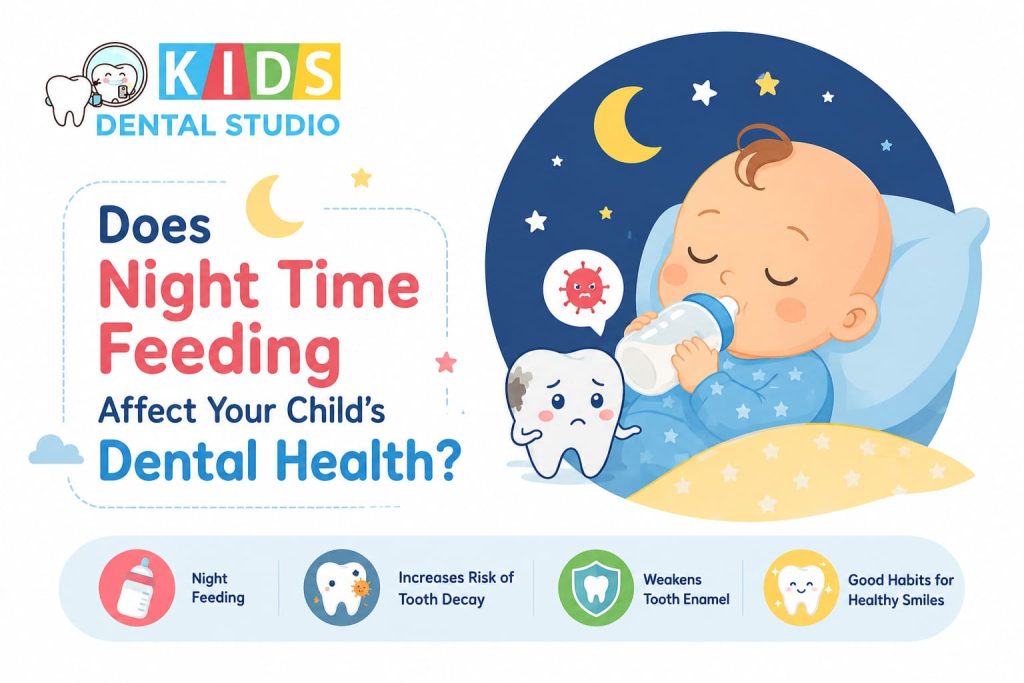
Does Night Time Feeding Affect Your Child’s Dental Health?
If your little one still wakes up for a bottle or breastfeeding at night, you’re probably not thinking about cavities while you’re half-asleep at 2 a.m. But here’s the short answer: yes, Night Time Feeding can affect your child’s dental health, especially once those first teeth start coming in. The reason isn’t the feeding itself — it’s what happens to milk sitting on teeth for hours while your baby sleeps.
This guide breaks down exactly how nighttime feedings interact with your baby’s teeth, which habits raise the risk, and what you can do tonight to protect that first smile — without giving up the bond that night feeds create.
Nighttime Feedings and Dental Health: What Parents Need to Know
Why Milk at Night Behaves Differently Than Milk During the Day
Milk, whether breast milk or formula, contains natural sugars (lactose). During the day, regular swallowing and saliva flow help clear this sugar from the mouth quickly. At night, two things change:
- Saliva flow decreases significantly during sleep, reducing the mouth’s natural defence against sugar.
- Swallowing slows down, so milk has more time to sit against the enamel of the teeth.
This combination creates an ideal environment for the bacteria that cause tooth decay to thrive, especially if a child falls asleep with milk still in their mouth.
Common Night Feeding Habits That Increase Dental Risk
Through years of seeing young patients, we’ve noticed a few recurring patterns that tend to raise the risk of decay:
- Bottle propping or self-feeding overnight, where a baby is left with a bottle in their crib for extended periods.
- Falling asleep mid-feed without any teeth cleaning afterwards.
- Frequent night waking for milk well past the age when most babies no longer need nutritional night feeds.
- Adding juice, sweetened formula, or flavoured milk to nighttime bottles.
- Sharing utensils or pacifiers that have been in an adult’s mouth, which can transfer decay-causing bacteria to a baby.
None of these habits makes a parent “wrong” — they’re incredibly common. But recognizing them is the first step toward reducing risk.
Baby Teeth After Night Feeding: What Decay Actually Looks Like
Many parents assume baby teeth don’t matter much since they’ll eventually fall out. This is one of the most important misconceptions we address as Pediatric dentists. Baby teeth play a critical role in speech development, proper chewing, and holding space for permanent teeth.
Early signs of decay related to nighttime feeding often appear as:
- White or chalky spots near the gum line of the upper front teeth
- Brown or black discoloration on the visible surface of teeth
- Sensitivity when eating cold or sweet foods
- Visible pitting or small holes in the enamel
If you notice any of these signs, an evaluation with a Pediatric Dentist sooner rather than later can prevent the decay from spreading to other teeth or reaching the tooth’s nerve.
Practical Steps to Protect Your Child’s Teeth During Night Feeds
The goal isn’t to stop nighttime feeding abruptly — that’s a personal and developmental decision for each family. Instead, focus on reducing the time milk sits on the teeth.
- Wipe gums or brush teeth after the last feed, even if your baby is drowsy. A soft, damp washcloth works well for infants without teeth yet.
- Avoid letting your baby fall asleep with a bottle in their mouth. If they need comfort sucking, consider transitioning to a pacifier instead.
- Never add sugar, honey, or juice to nighttime bottles.
- Begin twice-daily brushing as soon as the first tooth appears, using a rice-grain amount of fluoride toothpaste.
- Watch for teeth grinding. Some children develop nighttime grinding habits as they grow, and a custom night guard can help protect developing teeth from unnecessary wear if your dentist recommends one.
- Schedule a first dental visit by age one, as recommended by the American Academy of Pediatric Dentistry, so any early concerns are caught while they’re still easy to manage.
Why Trust Matters When It Comes to Your Child’s First Teeth
Caring for a baby’s teeth can feel overwhelming alongside everything else new parents manage. At Kids Dental Studio, our team focuses specifically on early childhood dental care, helping families build simple, sustainable routines that protect little smiles from the very first tooth. Every recommendation we make is based on current pediatric dental guidelines and real experience working with infants and toddlers — not guesswork.
Conclusion
Night time feeding doesn’t have to harm your child’s teeth. With simple habits — wiping gums after feeds, avoiding sugary additions, and starting dental visits early — you can protect their smile while still enjoying those precious nighttime moments together.
Worried about your child’s teeth after nighttime feeding? Visit Kids Dental Studio today and let our caring pediatric experts give your little one’s smile the gentle, expert attention it deserves.
FAQs
Does breastfeeding at night affect teeth?
Yes, if a baby falls asleep nursing without any oral cleaning afterwards, prolonged milk exposure combined with low nighttime saliva flow can contribute to decay over time.
Is milk at night bad for teeth?
Not inherently, but milk left sitting on teeth for hours during sleep — when saliva flow is low — can increase the risk of cavities if oral hygiene isn’t kept up.
Does breastfeeding delay teeth growth?
No. Tooth eruption timing is driven by genetics, not feeding method. Most babies get their first tooth between 6–12 months regardless of how they’re fed.
What age do most kids lose all baby teeth?
Most kids start losing baby teeth around age 6, with the process wrapping up by age 12–13 when the last molars are replaced.
Can I use coconut oil to brush baby’s teeth?
No, coconut oil shouldn’t replace fluoride toothpaste. It can be used for gentle gum massage in infants without teeth, but fluoride is essential once teeth appear.
Leave a reply