
Baby Teeth and Permanent Teeth: What Happens When Both Grow Together
Medically reviewed by Dr. Kisha Mehta, B.D.S., M.D.S. (Pedodontist), Kids Dental Studio, Ahmedabad.
Parents often notice something surprising around age six: a brand-new tooth peeking out right behind a baby tooth that hasn’t even started wiggling. It can look unusual, sometimes even a little alarming, but in most cases it’s simply how a child’s mouth moves from baby teeth to permanent teeth.
At Kids Dental Studio, this is one of the questions we hear most often from parents in Ahmedabad: “Is this normal?” The short answer is usually yes. This guide walks through how baby teeth and permanent teeth develop, why the two sets sometimes overlap, and when it’s worth bringing your child in for a check.
What Are Baby Teeth?
Baby teeth, also called primary teeth or milk teeth, are the first set of teeth a child develops. A full set includes 20 teeth, and they typically finish coming in by around age three.
Baby teeth do more than help a child chew and speak. They also hold space in the jaw for the permanent teeth growing underneath, guiding each adult tooth into its correct position. This is one reason losing a baby tooth too early, from decay or an accident, can cause crowding problems later.
What Are Permanent Teeth?
Permanent teeth, also known as adult or secondary teeth, are meant to last a lifetime. A full adult set includes 32 teeth, including four wisdom teeth that usually appear much later, often between the late teens and mid-twenties.
Unlike baby teeth, permanent teeth are not replaced if they’re lost. That’s exactly why building strong brushing, flossing, and checkup habits early matters so much for a child’s long-term oral health.
When Do Baby Teeth Appear?
Every child develops at a slightly different pace, but most babies get their first tooth, usually a lower central incisor, between six and ten months of age. Here’s a general timeline:
| Tooth | Typical Age of Eruption |
| Lower central incisors | 6-10 months |
| Upper central incisors | 8-12 months |
| Lateral incisors | 9-16 months |
| First molars | 13-19 months |
| Canines (cuspids) | 16-23 months |
| Second molars | 22-33 months |
Most children have all 20 baby teeth by their third birthday. If your child is well past these windows with no teeth showing, it’s worth mentioning at their next visit, though some delay is usually harmless.
When Do Permanent Teeth Start Coming In?
Permanent teeth generally start arriving around age six, beginning with the lower central incisors and the first permanent molars, sometimes called “six-year molars.” These molars are easy to miss because they erupt behind the baby teeth rather than replacing one directly.
From there, the remaining baby teeth are gradually replaced through early adolescence, with most permanent teeth in place by around age 12 to 13. Wisdom teeth, the last to arrive, typically show up between ages 17 and 25, if they come in at all.
Differences Between Baby Teeth and Permanent Teeth
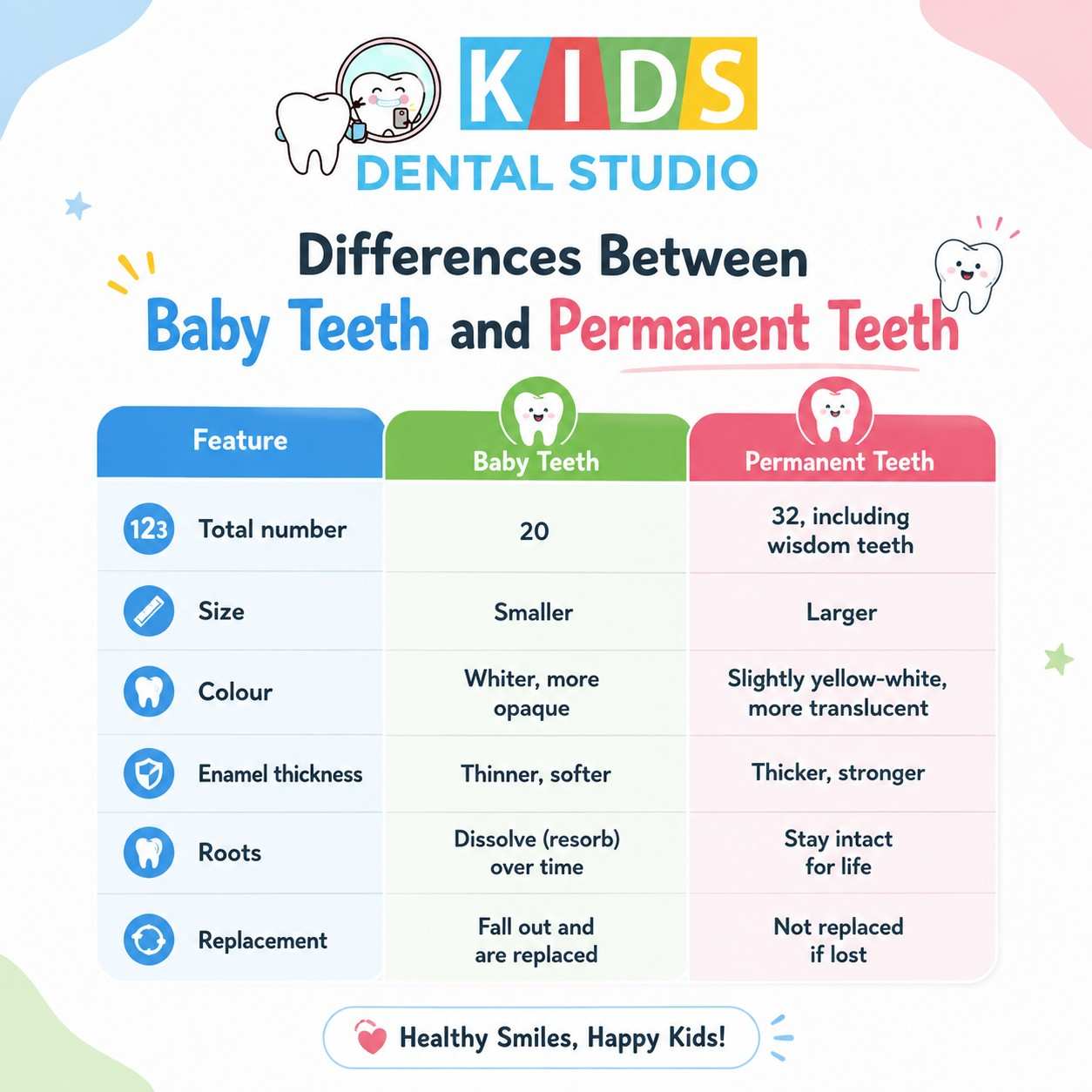 Parents can usually tell the two apart once they know what to look for:
| Feature | Baby Teeth | Permanent Teeth |
| Total number | 20 | 32, including wisdom teeth |
| Size | Smaller | Larger |
| Colour | Whiter, more opaque | Slightly yellow-white, more translucent |
| Enamel thickness | Thinner, softer | Thicker, stronger |
| Roots | Dissolve (resorb) over time | Stay intact for life |
| Replacement | Fall out and are replaced | Not replaced if lost |
Why Do Permanent Teeth Sometimes Grow Behind Baby Teeth?
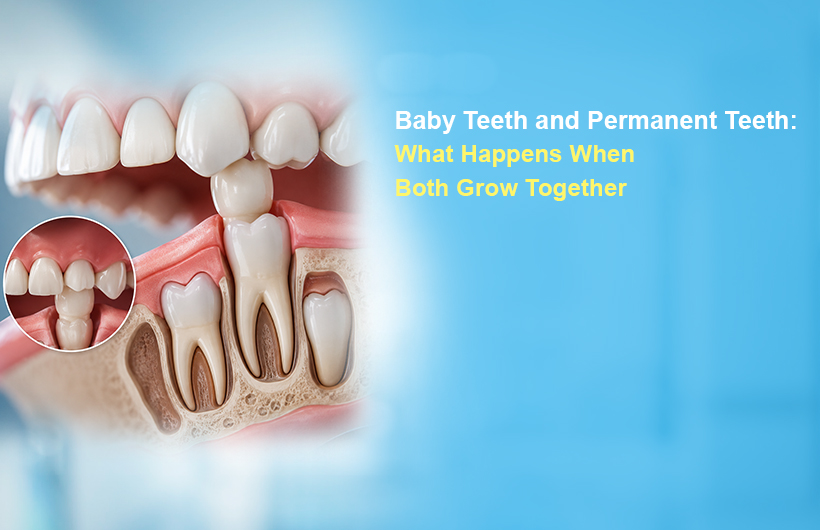
This pattern is common enough to have its own nickname among dentists: “shark teeth,” because the child briefly has two rows of teeth, similar to a shark.
It happens when the root of a baby tooth doesn’t dissolve on schedule, so the tooth stays firmly in place while the permanent tooth erupts behind it instead of pushing it out first. In most cases, pressure from the tongue and normal chewing loosens the baby tooth, and it falls out on its own within a few weeks to a couple of months.
If a baby tooth hasn’t come out within about six to eight weeks of the permanent tooth appearing, or if your child is uncomfortable, a pediatric dentist can remove it quickly and with minimal fuss. Our tooth extraction service is built specifically around gentle, child-friendly care for situations like this.
Common Dental Problems in Children
A few issues tend to come up most often during the mixed-teeth stage, when baby and permanent teeth are both present:
- Cavities in baby teeth, which can spread to nearby permanent teeth if left untreated
- Early loss of a baby tooth, which can let neighbouring teeth drift and crowd the space meant for the permanent tooth
- Crowding or crooked teeth, especially in smaller jaws
- Thumb-sucking or pacifier habits that affect how teeth and the jaw line up
- Delayed or unusually early eruption of permanent teeth
Many of these are easier to manage early. Preventive dental care, such as regular cleanings and sealants, catches most of these problems well before they become bigger concerns.
When Should Parents Visit a Pediatric Dentist?
It helps to bring your child in if you notice any of the following:
- A baby tooth hasn’t fallen out weeks after the permanent tooth appears behind it
- Swelling, redness, or bleeding around the gums
- Your child complains of pain while chewing or brushing
- A tooth looks discoloured, chipped, or unusually shaped
- It has been more than six months since the last checkup
Tips for Maintaining Healthy Teeth in Children
- Brush twice a day with a fluoride toothpaste suited to your child’s age
- Floss once permanent molars start touching each other
- Limit sugary snacks and drinks between meals
- Ask about fluoride treatment for extra protection against cavities
- Consider space maintainers if a baby tooth is lost early, to keep room open for the permanent tooth
- Keep up with six-monthly dental checkups, even before any problems appear
Conclusion
Seeing a permanent tooth grow in behind a baby tooth can catch parents off guard, but it’s one of the most common patterns in childhood dental development. Knowing the general timeline, and knowing when a baby tooth needs a little help coming out, makes the whole process much less stressful.
If you’d like a professional opinion on your child’s teeth, contact Kids Dental Studio or book an appointment online. You can also schedule a consultation if you’d simply like to talk through what to expect next.
Frequently Asked Questions
Does a 7-year-old have permanent teeth?
Yes, most 7-year-olds already have their first permanent molars and often their lower central incisors, with the rest of their baby teeth still present.
How do you know if teeth are permanent?
Permanent teeth are noticeably larger and slightly more yellow-white than baby teeth, and newly erupted front teeth often show small ridges called mamelons.
At what age do permanent teeth appear?
Permanent teeth generally begin around age 6, with most in place by 12 to 13 and wisdom teeth arriving between 17 and 25.
Which types of teeth are permanent?
A full permanent set has 8 incisors, 4 canines, 8 premolars, 8 molars, and 4 wisdom teeth, 32 in total; premolars only exist in the permanent set.
What do permanent teeth look like when they come in?
They look larger and slightly duller than surrounding baby teeth, often with small serrated mamelon edges and a slightly different angle until the jaw grows enough to make room.
Leave a reply