
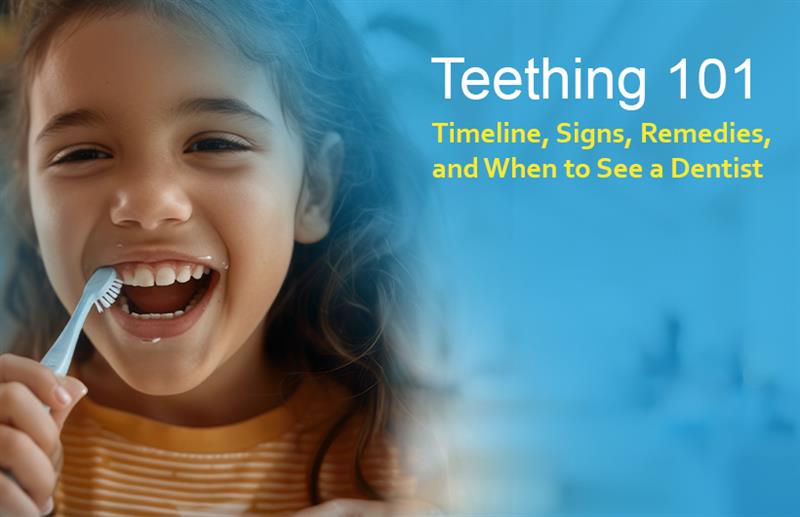
Teething 101: Timeline, Signs, Remedies, and When to See a Dentist
Teething is one of the first major milestones in a baby’s life and often one of the most challenging phases for parents. As tiny teeth begin to push through the gums, babies may become irritable, uncomfortable, and fussy. Many parents feel confused about what is normal, what needs attention, and when professional help is required. This baby teething guide is designed to help you understand the teething timeline, recognise common signs, try safe remedies at home, and know when it’s time to consult a dentist.
At Kids Dental Studio, we often meet parents who are worried about their baby’s discomfort during teething. With the right information and guidance, this phase can be managed smoothly while ensuring your child’s oral health stays on track.
What Is the Teething Timeline and When Does It Start?
Teething usually begins between 4 to 7 months of age, although some babies may start earlier or later. Every child is different, and variation in timing is completely normal. Most babies will have their first tooth appear in the lower front area, followed by the upper front teeth.
By the time a child turns three, most will have all 20 primary (milk) teeth. The teething process happens gradually, and symptoms may come and go as each tooth erupts. During this period, babies may experience gum irritation, increased drooling, and a strong urge to chew on objects.
Understanding the timeline helps parents stay calm and prepared. Teething discomfort is temporary, but the care you provide during this stage plays a big role in shaping healthy oral habits for the future. If you are unsure whether your baby’s symptoms are related to teething or something else, consulting a pediatric dentist can give you peace of mind.
What Are the Common Signs of Teething in Babies?
Teething symptoms can vary from mild to moderate. Some babies sail through this phase with minimal discomfort, while others show more noticeable signs. Common symptoms include swollen or tender gums, excessive drooling, fussiness, and difficulty sleeping.
Babies may also bite or chew on fingers, toys, or anything they can reach to relieve pressure on their gums. Mild redness around the mouth and cheeks is often caused by drooling rather than the teeth themselves. In some cases, babies may eat less or seem less interested in feeding for a short time.
It’s important to note that high fever, severe diarrhoea, or prolonged illness are not typical teething symptoms. These may indicate another health issue and should be evaluated by a doctor. If gum discomfort seems intense or persistent, teething treatment in Ahmedabad under professional supervision can help ensure your child is comfortable and safe.
How Can Parents Soothe Teething Discomfort Safely?
There are several simple and effective ways to ease teething discomfort at home. Gently rubbing your baby’s gums with a clean finger can provide relief. Offering a clean, chilled teething ring is another safe option, as the cool temperature helps reduce inflammation and soothes sore gums.
Make sure the teething toy is designed specifically for babies and does not contain harmful chemicals. Avoid freezing teething rings, as extreme cold can damage delicate gum tissue. Keeping the baby’s mouth dry by wiping away excess drool can also prevent skin irritation around the lips and chin.
Over-the-counter teething gels or medications should only be used after consulting a dentist or paediatrician. At Kids Dental Studio, parents are often guided toward natural and safe remedies that focus on comfort without unnecessary risks.
When Should You See a Dentist for Teething Problems?
Many parents wonder whether a dentist visit is necessary during teething. While teething itself is a natural process, there are times when professional advice is helpful. If your baby seems to be in constant pain, has swollen gums with signs of infection, or if teeth appear to be erupting in an unusual pattern, a dental check-up is recommended.
The first dental visit is usually advised by the time the first tooth appears or by the child’s first birthday. Early visits help detect potential issues, guide parents on oral hygiene, and build a positive relationship between the child and the dentist. Searching for a child dentist near me Ahmedabad can connect you with specialists who understand children’s unique dental needs.
A pediatric dentist can also advise parents on cleaning baby teeth, preventing early tooth decay, and managing habits like thumb sucking. Early guidance can prevent future dental problems and ensure a healthy smile as your child grows.
How Does Early Dental Care Support Healthy Baby Teeth?
Even though baby teeth eventually fall out, they play a vital role in speech development, proper chewing, and guiding permanent teeth into place. Maintaining good oral hygiene from the start helps prevent cavities and infections that can affect overall health.
Cleaning your baby’s gums with a soft cloth before teeth appear and brushing gently once teeth erupt helps establish a daily routine. Avoid putting babies to sleep with bottles containing milk or sweet liquids, as this can increase the risk of tooth decay.
At Kids Dental Studio, we emphasise educating parents about preventive care from the earliest stages. A supportive dental environment helps children feel comfortable and confident, making future visits stress-free.
Final Thoughts for Parents
Teething is a temporary but important phase in your baby’s development. Understanding what to expect and how to manage discomfort can make the journey easier for both parents and children. This baby teething guide highlights the importance of patience, safe home remedies, and timely dental care.
If you ever feel unsure or concerned, reaching out to a trusted pediatric dentist in Ahmedabad can provide reassurance and expert support. With the right care, teething can be managed gently, setting the foundation for a lifetime of healthy smiles.
Leave a reply